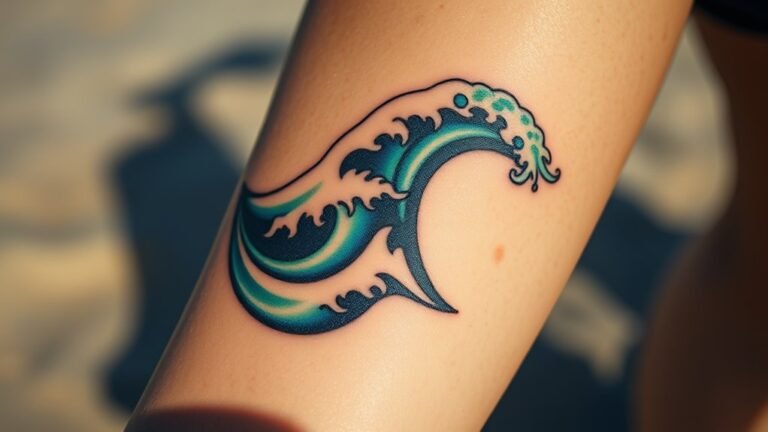
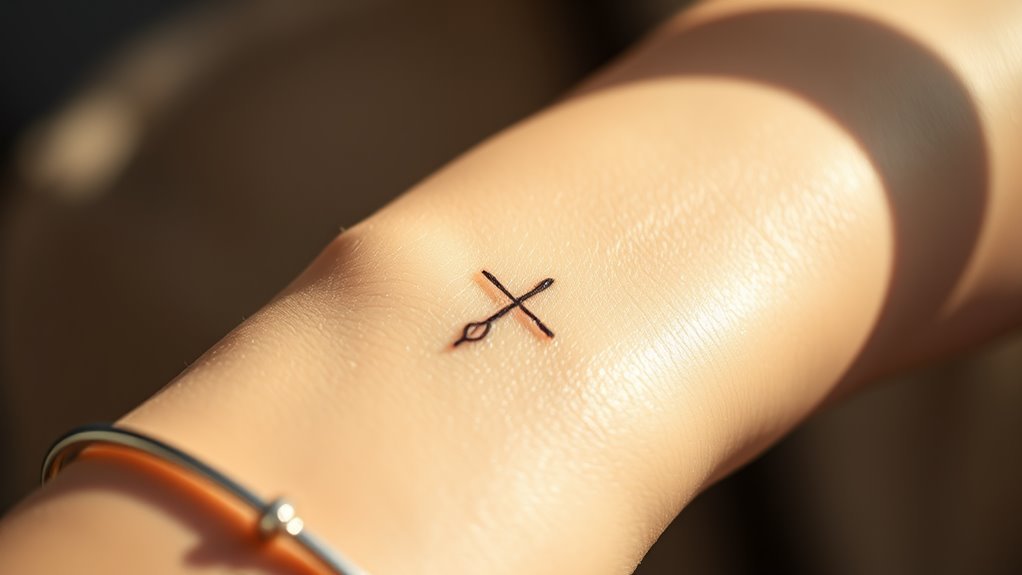
Cross Wrist Tattoo Meaning and Symbolism
When you consider a cross wrist tattoo, it's more than just ink on skin; it often symbolizes faith, hope, and personal transformation. You might find it intriguing how such a simple design carries deep meanings across different cultures and personal beliefs. Each tattoo tells a unique story, reflecting resilience and a connection to something greater. As you explore this topic further, you'll uncover the various historical and spiritual nuances that influence these tattoos and how they resonate with individual journeys. What might surprise you is the personal significance that often lies beneath the surface.
In a Nutshell
- Cross wrist tattoos symbolize faith, hope, and redemption, representing the wearer's personal beliefs and spiritual journey.
- They often serve as reminders of resilience and strength during life's challenges and transformations.
- The design can reflect cultural variations, such as Christian salvation or the Celtic intertwining of life and eternity.
- Incorporating personal elements, like initials or dates, enhances the tattoo's significance and emotional connection.
- Minimalist designs on the wrist convey purity, while ornate styles express deeper spiritual meanings and heritage.
Historical Significance of the Cross
The cross, often seen as a simple symbol, carries a profound historical significance that resonates deeply with many cultures and faiths. You mightn't realize that its historical origins stretch back centuries, intertwining with stories of sacrifice, redemption, and hope.
From ancient civilizations to modern-day interpretations, the cross symbolizes connection and belonging. It represents a bridge between the earthly and the divine, inviting you to explore your own journey.
Each time you see a cross, think of the countless lives it has touched, the communities it has united. This powerful emblem evokes a sense of purpose, reminding you that you're part of something bigger.
As you embrace cross symbolism, you connect with a rich tapestry of heritage and shared human experience.
Spiritual Meanings of Cross Tattoos
Cross tattoos embody a multitude of spiritual meanings that resonate deeply with individuals across various beliefs. They often serve as a powerful reminder of faith, hope, and redemption.
Each design carries its own spiritual symbolism, offering a unique cross interpretation that reflects your personal journey. Whether it's a simple outline or an intricate piece, the cross can represent divine connection, guiding you through life's challenges.
Many wear it as a badge of belonging, signifying a commitment to a higher purpose or community. The cross acts as a bridge between the earthly and the divine, inviting you to explore your spirituality and embrace your truth.
Ultimately, it's a reflection of your resilience and the love that surrounds you.
Personal Stories Behind Cross Tattoos
Many people wear cross tattoos as a symbol of their personal journeys, each telling a unique story of struggle, faith, and transformation.
For you, it might represent a turning point—perhaps a moment when you overcame adversity or rediscovered your faith. Each inked line carries the weight of your experiences, embodying the personal symbolism that resonates deeply within you.
Your cross tattoo could be a tribute to a loved one who inspired your faith journey, a reminder of the strength you found in vulnerability, or a declaration of hope during challenging times.
Ultimately, these tattoos create connections, fostering a sense of belonging among those who share similar paths. Your story, etched in ink, invites others to understand and embrace their own journeys.
Cultural Variations and Interpretations
While you may see a cross tattoo as a powerful symbol of faith, its meaning can shift dramatically across different cultures and traditions. Embracing this diversity can create a deeper connection for you.
Here are a few cultural variations that highlight the rich tapestry of cultural symbolism associated with cross tattoos:
- Christianity: Represents salvation and the sacrifice of Jesus.
- Celtic Tradition: Signifies the intertwining of life and eternity.
- Egyptian Culture: The ankh, resembling a cross, symbolizes life and immortality.
- Native American Tribes: Cross variations often embody the four cardinal directions, representing balance.
As you explore these interpretations, you'll recognize how a cross tattoo can resonate with your journey, bridging faith and identity across cultures.
Design Elements That Enhance Meaning
When you consider getting a cross tattoo, the design elements can greatly enhance its meaning and personal significance.
Think about incorporating symbolic elements like flowers, vines, or even geometric shapes that resonate with your journey. Each design style can convey different emotions; a minimalist cross speaks of purity and simplicity, while an ornate design can reflect deep spirituality and history.
You might choose bold colors to signify passion or muted tones for a more subtle reminder of faith. Adding personal touches, like initials or dates, can deepen the connection you feel.
Ultimately, these design choices transform your cross tattoo from mere ink into a powerful emblem of belonging and identity, celebrating your unique story and beliefs.
Choosing the Right Placement
Choosing the right placement for your cross tattoo can greatly impact its visibility and personal resonance. Your tattoo is a reflection of your faith and identity, so it's crucial to find a spot that aligns with your placement considerations and visibility preferences.
Here are some ideas to contemplate:
- Inner Wrist: Easily visible, perfect for daily reminders of your beliefs.
- Outer Forearm: Offers a bold statement while still being somewhat discreet.
- Back of the Neck: A hidden gem that can be revealed when desired.
- Ankle: Subtle and personal, ideal for a more private expression.
Each placement tells a story, so choose one that resonates with your journey and feels like home to you.
Your tattoo is your narrative—make it shine!
Care and Maintenance for Tattoos
Once you've found the perfect placement for your cross tattoo, caring for it becomes paramount. Proper tattoo aftercare guarantees your ink stays vibrant and meaningful.
Start by gently washing the area with mild soap and lukewarm water, then pat it dry with a clean towel. Apply a thin layer of fragrance-free moisturizer or specialized tattoo ointment to promote healing and ink preservation.
Avoid soaking it in water, like pools or baths, until it's fully healed. Remember, sunlight can fade your design, so cover it up or use sunscreen when you're out.
Frequently Asked Questions
Are There Specific Colors Associated With Cross Wrist Tattoos?
When choosing colors for your cross wrist tattoo, consider what resonates with you. Bold blacks symbolize strength, while vibrant reds might express passion. Each hue carries its own meanings, influencing your tattoo style and personal connection.
What Are Common Misconceptions About Cross Tattoos?
You might think cross tattoos only represent Christianity, but they hold spiritual significance across cultures. Many believe they symbolize protection or guidance, while others view them as personal expressions of faith and identity. Embrace these variations!
Can Cross Tattoos Be Combined With Other Symbols?
Absolutely, you can blend cross tattoo designs with other symbols to create unique symbol combinations. Imagine intertwining your beliefs with meaningful imagery, crafting a personal story that resonates deeply with your journey and sense of belonging.
How Painful Is Getting a Cross Tattoo on the Wrist?
Getting a cross tattoo on your wrist can sting, depending on your pain tolerance. With proper tattoo care afterward, you'll cherish your new ink, feeling a deep connection and belonging to something greater than yourself.
What Should I Consider Before Getting a Cross Tattoo?
Before getting a cross tattoo, consider its design and placement. Reflect on its personal significance—what it means to you. This decision can connect you to a deeper sense of belonging and expression in your life.